Summary
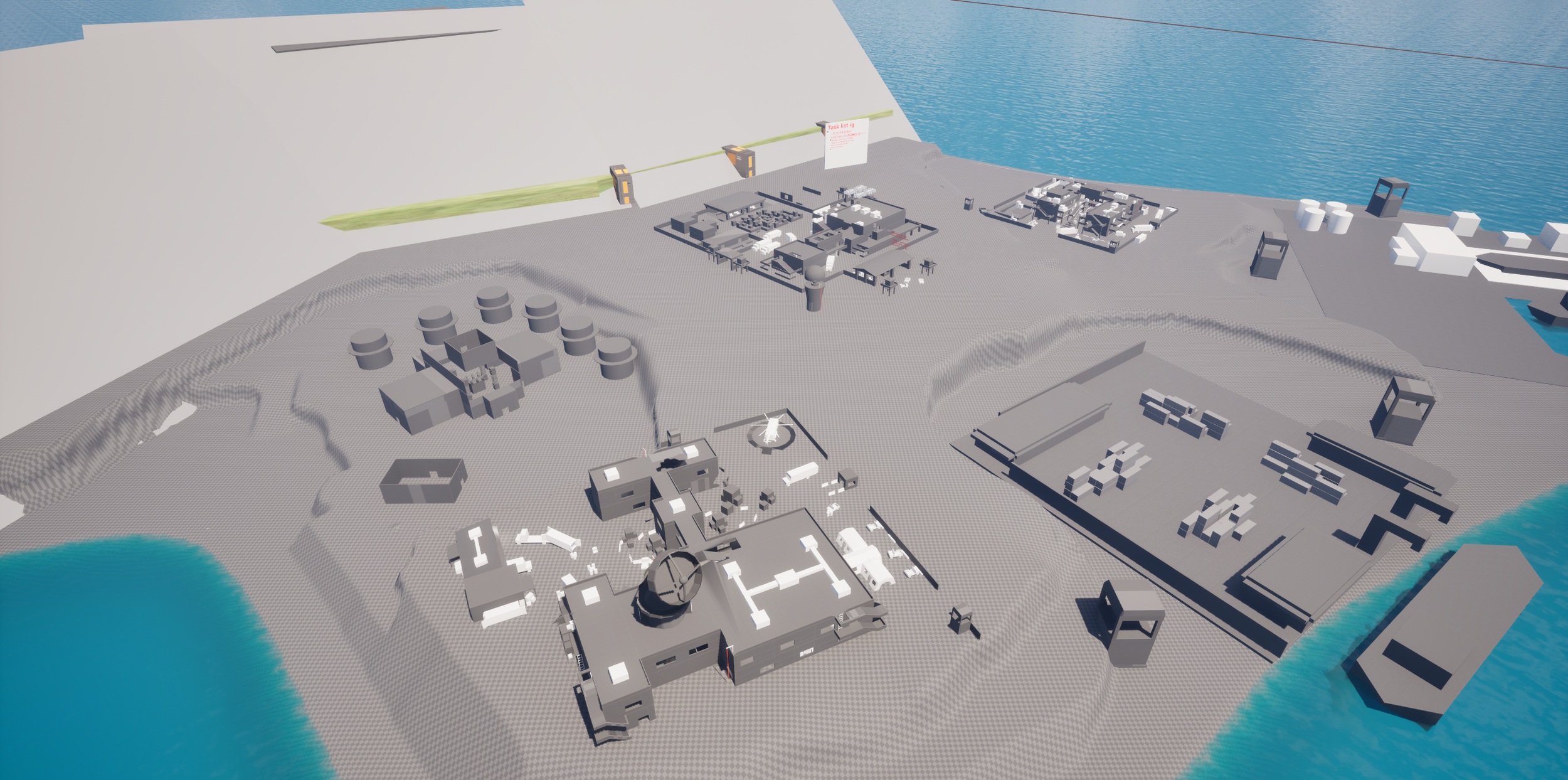
This battle royale map is a collaborative design project between myself and fellow designer Callym Lukie. The project has been developed from initial game design documentation and 2d layouts through 8 unique points of interest all designed in unreal engine 5.
The map began with a blockout of an abandoned military base island, establishing the core layout, scale, and player flow for a battle royale map featuring eight unique points of interest. I worked closely with Callym to collaboratively plan all eight POIs, then split design and blockout responsibilities evenly, while integrating gameplay and traversal mechanics to support smooth movement and engagement across the map.
POINT OF INTEREST: COMMUNICATIONS CENTER
-
Backstory
The Communications Center was once a critical structure on the military base island, serving as the primary lifeline that kept soldiers connected to outside command and active military operations. After a swift evacuation by the occupying forces, the facility was abandoned and left to decay, with its deteriorating state shaping both the space and its gameplay opportunities.Design Intent
The Communications Center is designed to support a wide range of combat styles. Tight interior hallways and rooms create close-quarters combat encounters, while the surrounding buildings and structures provide medium- and long-range sightlines. Vertical elements throughout the POI encourage tactical positioning, rewarding players who adapt to shifting elevations and engagement distances. -
Development of the Communications Center began with research into real world communications infrastructure, ranging from small island radio facilities to large scale military communication arrays. This research informed the initial blockout, establishing major landmarks, interior circulation, and engagement spaces, with a prominent radio dish antenna tower serving as a visual landmark and navigational anchor. Smaller communications facilities influenced the layout and theme of the main and supporting structures.
The space was then iterated to balance combat pacing and traversal. Interior hallways were refined to support clear close quarters encounters, while exterior combat and rotation were shaped through the use of scaffolding, vertical ziplines, and staircases to control medium and long range sightlines, encourage vertical movement, and create clear rotation options throughout the point of interest.
-
The Communications Center marked my first large scale hands on project designed specifically for a first person shooter, following previous experience working in third person and isometric viewpoints. This shift introduced new and unexpected challenges, particularly around camera placement, player scale, and traversal readability. Elements such as object scale, ramp angles, and pathing initially proved difficult to tune for a first person perspective. To address this, metric gyms were established early to maintain consistent, playable scale and ensure all movement and interaction spaces felt natural for the player.
Another major challenge was adapting the layout to better support fast paced battle royale gameplay. Early iterations of the Communications Center featured a smaller footprint with narrow engagement spaces, resulting in slower, more restrictive encounters reminiscent of single player shooters. Through research and observation of comparable titles such as Call of Duty Warzone, I identified the need for wider combat spaces, clearer flanking routes, and more flexible traversal options. The POI was expanded with additional support structures and enhanced vertical traversal through ascenders, ramps, and scaffolding, allowing for faster rotations, multiple engagement angles, and a broader range of viable playstyles.